
In Part 1, I took you up onto my rooftop and into Seville’s tiny cobbled lanes. Now it’s time to head out into the sunshine. This is the Seville of long mornings, lingering lunches, jaw-dropping architecture and some of the friendliest people I’ve met.
If you’ve ever wondered why people fall so hard for this city, grab a coffee and let me show you.
Mornings Start With Coffee
I’m a little bit fussy about coffee. Growing up with Australian café culture will do that to you. So I was thrilled to find that Seville does a beautiful cup.
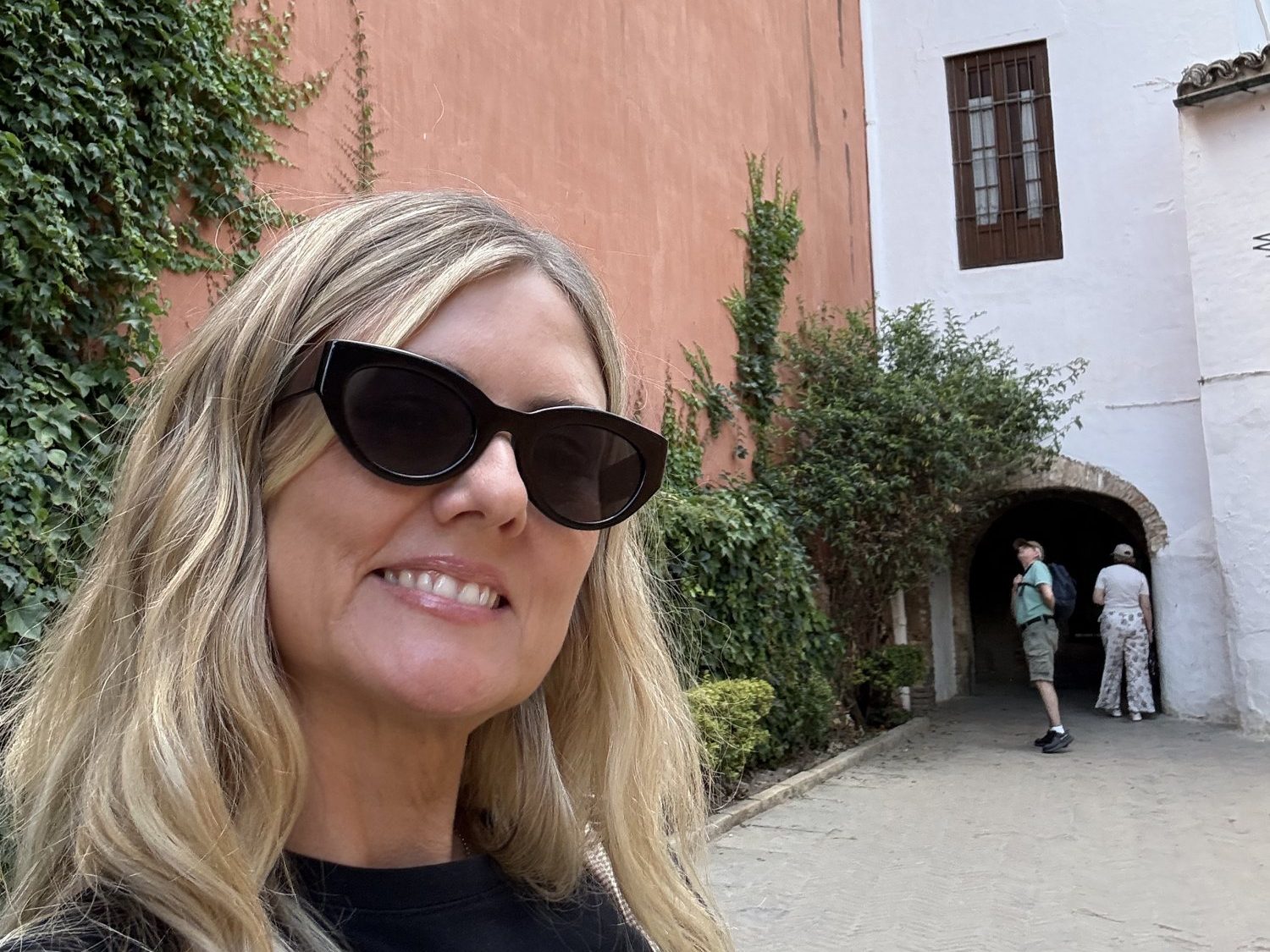
Most mornings I’d wander down from my apartment to a little café nearby and order a café con leche, rich and milky and exactly what I needed. Decaf, yes. Almond milk… no worries. Breakfast here is simple and perfect: toasted bread rubbed with fresh tomato, drizzled with olive oil and, if you like, topped with a little jamón. It’s called tostada con tomate, and I’m now slightly obsessed. I also tried Turkish eggs for the first time… where have you been all my life! Yum.
What I loved most was the ritual of it. Locals stand at the bar, chat with the staff, read the paper and knock back a quick coffee before work. Nobody’s in a rush, yet everybody seems to get where they’re going. I’d settle on a bench outside or by the window and just watch the city begin its day.
The Absolutely Stunning Plaza de España
I’d seen photos. I thought I was prepared. I was not.
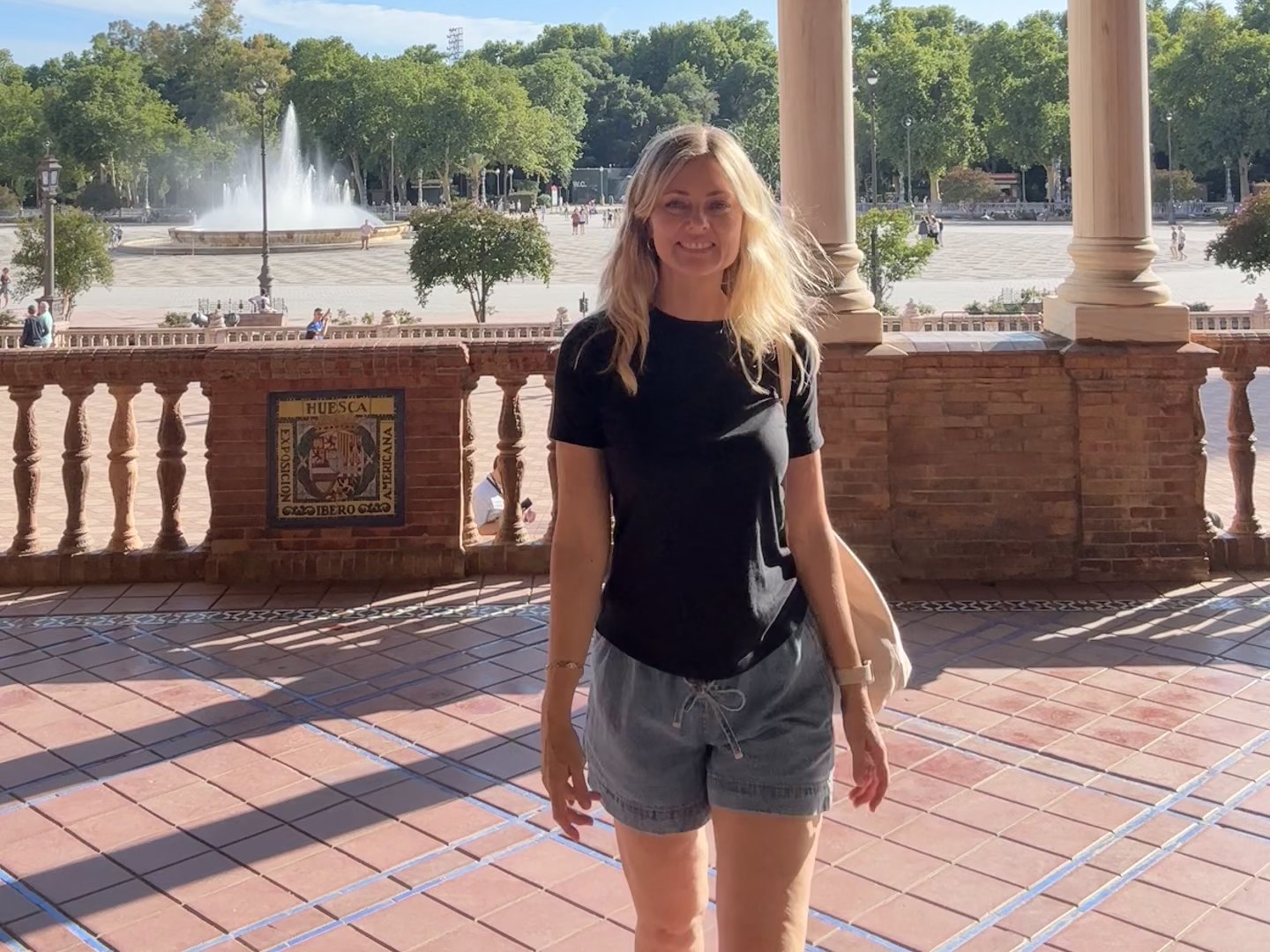
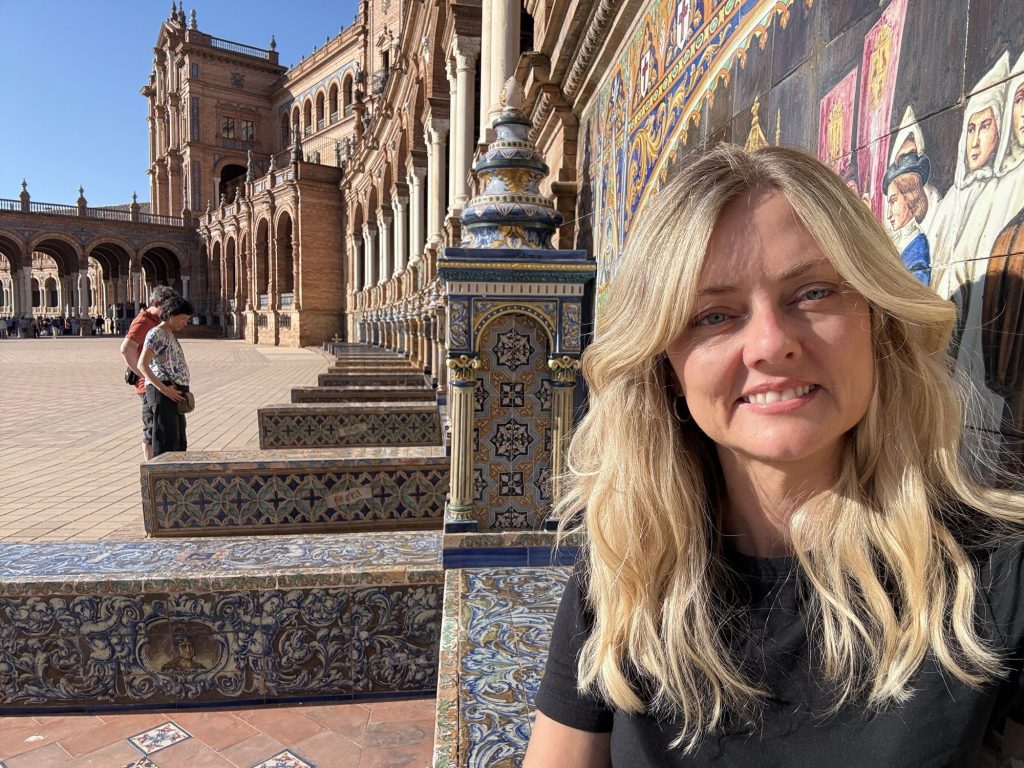
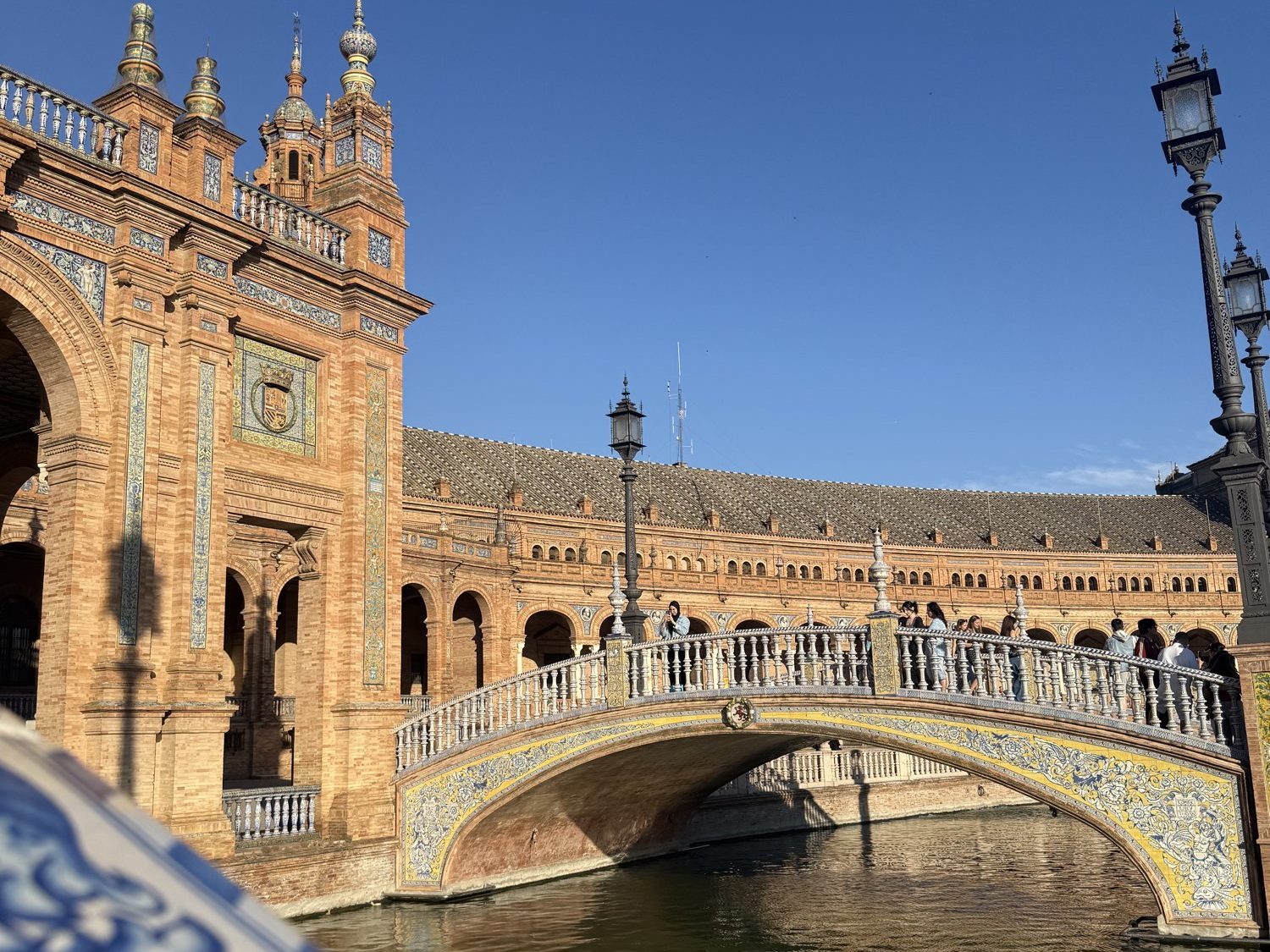
Plaza de España is one of the most breathtaking places I’ve ever stood. It was built for the Ibero-American Exposition of 1929, and it’s a sweeping half-moon of brick, marble and hand-painted tiles. Ornate towers rise at either end. A canal curves along the front, crossed by pretty tiled bridges, with little rowboats drifting along the water.
All around the base of the building are tiled alcoves, each one representing a different Spanish province, with painted maps and scenes from its history. I wandered from one to the next, completely absorbed, running my fingers over the tiles.
I genuinely stopped in my tracks when I first walked in. I remember putting my hand on my chest and just saying “oh” out loud to no one. It’s grand and romantic and a little bit dreamlike. A flamenco dancer performed in the shade of the arches while a small crowd gathered, the stamp of her heels echoing across the plaza. Couples posed for photos on the bridges. Horse-drawn carriages clip-clopped past.
My tip: go early in the morning or late in the afternoon. The light is softer, the crowds are thinner, and in the warmer months you’ll avoid the worst of the midday heat. And give yourself time. This is not a place to rush.
The Cathedral and Centuries of History
Seville wears its history openly, and nowhere more than at the cathedral. It’s one of the largest Gothic cathedrals in the world, and standing beneath it makes you feel wonderfully small.
Inside, it’s vast and hushed. Soaring columns disappear into vaulted ceilings, light pours through stained glass, and the gold of the main altarpiece almost glows. It’s also home to the tomb associated with Christopher Columbus, carried aloft by four figures, which is quite something to see in person.
Then there’s the Giralda, the cathedral’s bell tower. It began life as the minaret of the mosque that once stood here, and you can still see that Moorish heritage woven through the city. Instead of stairs, the climb is a series of gentle ramps, built so the tower could be ridden up on horseback. The view from the top across Seville’s rooftops is worth every step, and yes, I tried to spot my own little rooftop from up there.
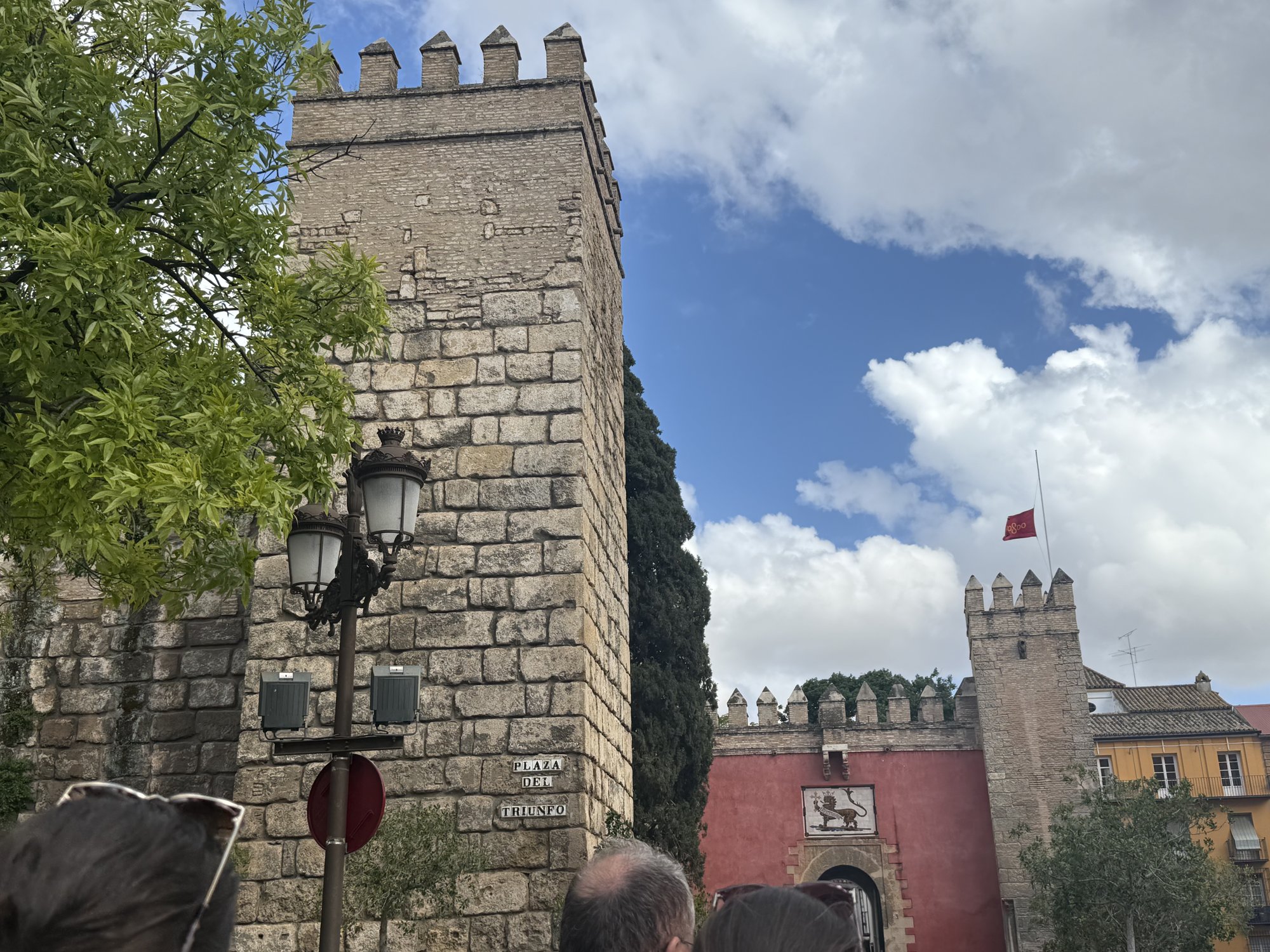
What struck me most was how many layers of history sit side by side here. Roman, Moorish, Christian. Courtyards of orange trees beside Gothic arches. You can feel the centuries in the stone.
Eating My Way Through Seville
Seville is a tapas city, and that suits a solo traveller perfectly. You can order a few small plates, try a little of everything and never feel awkward eating alone.
The croquetas were a highlight. Crisp and golden on the outside, creamy on the inside, and I may have ordered them more than once. I was also delighted by how easy it was to find gluten-free food, and dairy-free gelato became my favourite little treat on a warm afternoon wander.
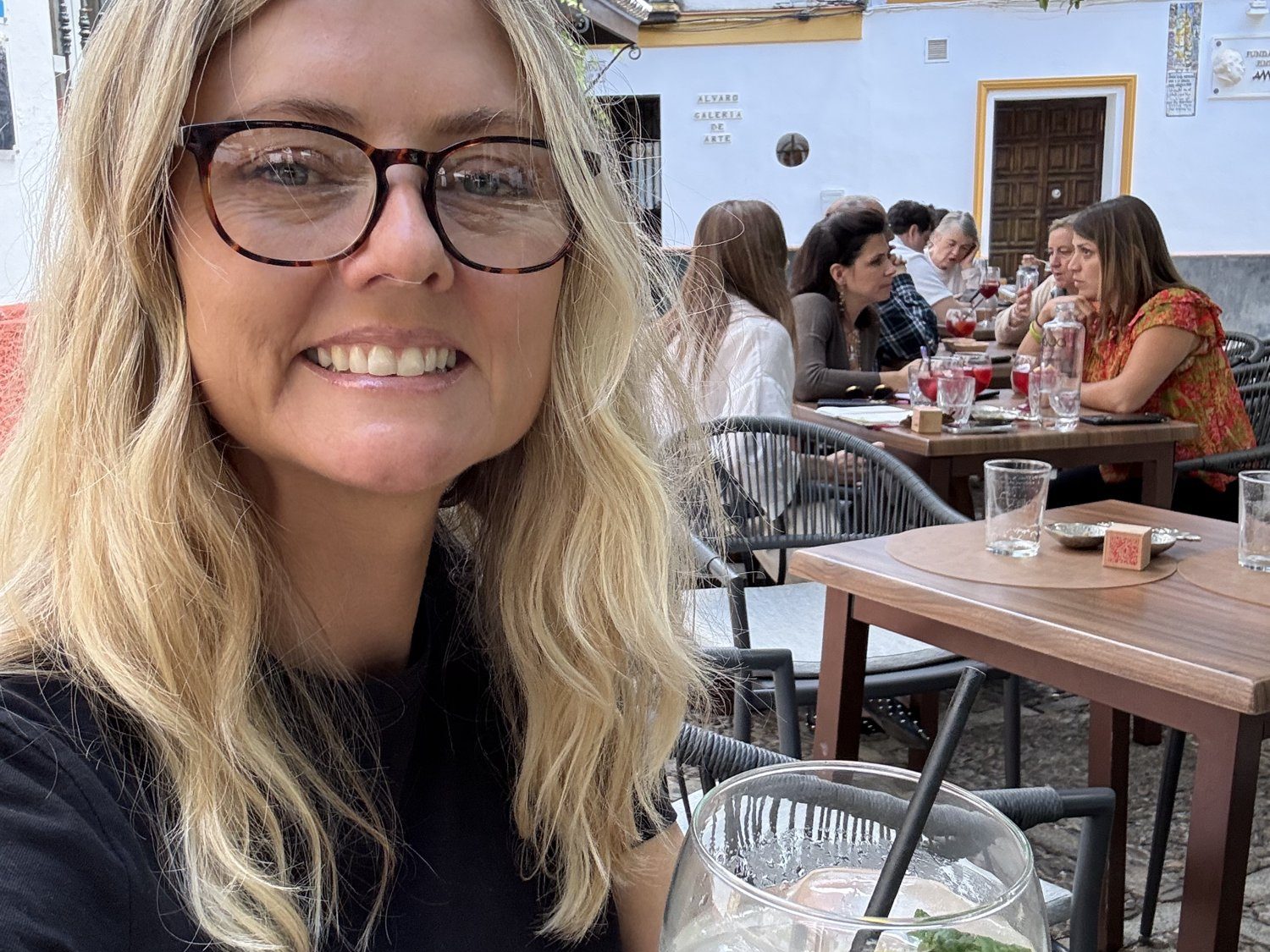
Meals here are slow and social. Lunch can stretch for hours, and dinner rarely starts before nine. I embraced it completely.
The Fine Art of People Watching
Seville might be the best people-watching city I’ve ever visited. Life is lived outdoors here, in plazas, on terraces and along the lanes.
I’d sit with a coffee or a glass of wine and simply watch. Elegant older couples taking their evening stroll, dressed beautifully. Grandparents with grandkids chasing pigeons. Friends greeting each other with kisses on both cheeks and talking with their whole hands. Young couples whispering at corner tables. It’s like a gentle, endless film, and you get a front-row seat for the price of a coffee.
As a solo traveller, people watching is one of my favourite things. It makes me feel connected to a place, part of its rhythm, even when I’m on my own.
Friendly People and Shopping
The people of Seville were so warm. Shopkeepers chatted with me patiently. Waiters also stopped to chat and ask me where I was from. A woman at a café helped me order. These small moments of kindness are what I carry home.
And the shopping! The pedestrian streets in the centre are lovely for a wander, mixing well-known stores with little boutiques. But my favourite finds were the small artisan shops: hand-painted ceramics, beautiful fans, embroidered shawls and leather goods. I came home with a few pieces that make me smile every time I see them. Each one holds a little bit of Seville.
Why Seville Is So Romantic
Everything about this city feels romantic: the lamplit lanes, the flamenco, the long dinners, the sunsets, the tiles and the courtyards. But here’s what I discovered. You don’t need a partner to feel it. Romance can be the way a city makes you feel about your own life.
Seville made me feel happy, excited and, more often than I can count, lost for words.
Plan Your Own Slow Seville Escape
If Seville is calling you, my advice is simple: stay longer than you think you need, book somewhere that feels like home, and leave plenty of room in your days for doing nothing at all. That’s where the magic lives.
You can see Seville through my lens in my Spain series on YouTube at youtube.com/@WanderingRach. And if you’re dreaming of your first slow solo trip, my free guide The Soft Landing is waiting for you at softlanding.wanderingrach.com.
If these stories have brought a little Spanish sunshine into your day, you can support me on Ko-fi. It helps me keep sharing slow travel with you.
Rach x

