
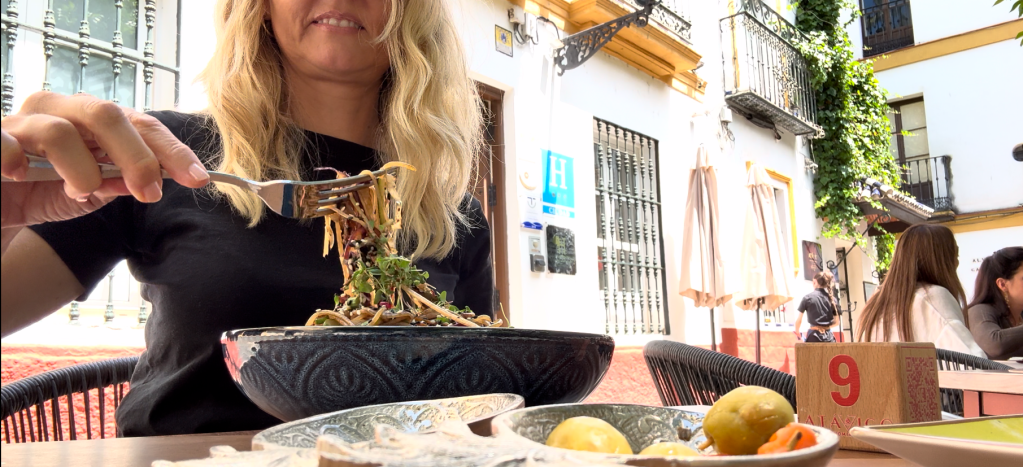
The dinner table alone is where solo travel tends to reveal itself fully — no itinerary to hide behind, no companion to fill the silence. Just you, a menu, and whatever story you’re telling yourself about what this moment means.
I used to bring a book everywhere, less because I wanted to read and more because I needed a prop. Something to signal I’m fine, I’m occupied, don’t look at me too long. It took years of solo dinners to realise the book wasn’t for the room. It was for me.
Deciding to actually be there
What changed things was deciding to actually be there. Ordering the thing I wanted, not the thing that photographed well or arrived fastest. Asking the waiter what they’d order themselves. Watching the room instead of my phone — the couple mid-argument two tables over, the birthday being celebrated badly, the way light moves across a room as the evening turns.
Practical tips for your first solo dinner
A little planning takes most of the nerves out of it:
- Go early. Restaurants are quieter at the start of service, staff have more time, and you’re less likely to be squeezed beside a large group.
- Book if you can. “A table for one at seven” removes the moment of standing at the door wondering if they’ll fit you in.
- Choose somewhere with a counter or bar. Bar seating is made for solo diners. You can chat with the staff, watch the kitchen, and never feel like there’s an empty chair opposite you.
- Ask for a recommendation. It starts a small conversation and often leads you to the best thing on the menu.
- Order a little more than you need. A starter, a glass of something local, dessert if you want it. Treat yourself the way you’d treat a friend.
Where to sit
Where you sit shapes how the meal feels. A window seat or an outdoor table gives you a view to rest your eyes on. A corner table with your back to the wall lets you see the room without feeling watched. A spot at the bar puts you in the middle of the action. Ask for what you’d like — most places are happy to oblige, even for one.
What to order when you’re dining alone
Eating alone has one big advantage: you never have to compromise on the menu. There’s no one to share with, so order exactly what you want. A few ideas that make a solo meal feel generous rather than functional:
- Small plates. Tapas, mezze and shared-plate menus are perfect alone. Order two or three and you get to taste more of the kitchen.
- The local speciality. Ask what the restaurant is known for. It’s a good conversation starter and usually the best thing on the menu.
- A half bottle or a glass by the glass. Many places offer wine by the glass, so you can try something local without committing to a whole bottle.
- Dessert, always. It slows the meal down and gives you a reason to linger.
If you’re unsure, tell the waiter you’re happy to be guided. Most people who work in restaurants love being asked, and solo diners often get the most thoughtful recommendations.
What to do with your hands (and your phone)
It’s fine to bring a book or a notebook. The point isn’t to be prop-free; it’s to know why you’re bringing it. A notebook is a lovely companion at dinner — jot down what you’re eating, what you overheard, how the day felt. Your phone is the one I’d leave in your bag. Once it comes out, you stop being in the restaurant and start being somewhere else.
The most honest hour of your trip
A solo dinner, done properly, is one of the most honest hours you’ll spend all trip. No one to perform for, nothing to manage, no conversation to keep afloat. Just you and your senses, fully available to the meal in front of you.
If you’re nervous about it, start small — a quiet lunch, an early dinner, somewhere with a view instead of full eye line to the room. But don’t skip it altogether. Eating alone in public is a quiet act of self-possession, and it gets easier — genuinely easier — every single time you do it.
Once you’re comfortable, try letting a meal stretch out completely. I make the case for it in The Case for the Long, Unphotographed Lunch. And if the bigger worry is feeling lonely, Solo Doesn’t Mean Lonely might help.
Frequently asked questions
Is it weird to eat alone at a restaurant?
Not at all. Solo dining is increasingly common, and staff are used to it. Most people are far too absorbed in their own meal to notice you.
How do I feel less awkward eating alone?
Go early, sit at the bar or by a window, and ask your server for a recommendation. Having a reason to be there — the food — makes it feel natural.
Should I bring a book when dining alone?
If you’d enjoy reading, yes. Just notice whether it’s for you or for the room. Many solo diners find a notebook or simply watching the room more rewarding.


5 responses to “How to Eat Alone in a Restaurant and Actually Enjoy It”
[…] If eating alone is the moment that feels hardest, you’re not the only one. I wrote a whole post on it: How to Eat Alone in a Restaurant and Actually Enjoy It. […]
LikeLike
[…] What should I do on my first night alone in a new city?Keep it simple. Eat early near your accommodation, take a short walk somewhere busy, and get a good night’s sleep before exploring further. If eating alone feels daunting, read How to Eat Alone in a Restaurant and Actually Enjoy It. […]
LikeLike
[…] you’re dining alone and that part still feels daunting, start with How to Eat Alone in a Restaurant and Actually Enjoy It. And for more on giving a place time, read The Art of Arriving […]
LikeLike
[…] How to Eat Alone in a Restaurant and Actually Enjoy It […]
LikeLike
[…] Counter seats and bar stools. The staff and the people beside you are within easy conversation distance. More on that in How to Eat Alone in a Restaurant and Actually Enjoy It. […]
LikeLike